

CIXIN MACHINERY TECHNOLOGY

CNC-Milled Automotive Structural Component
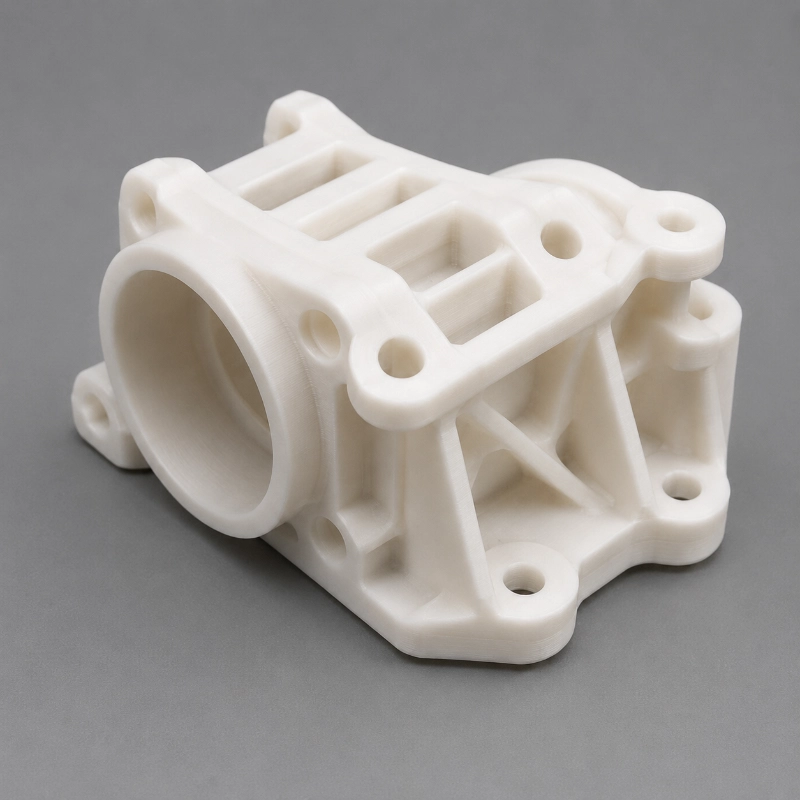
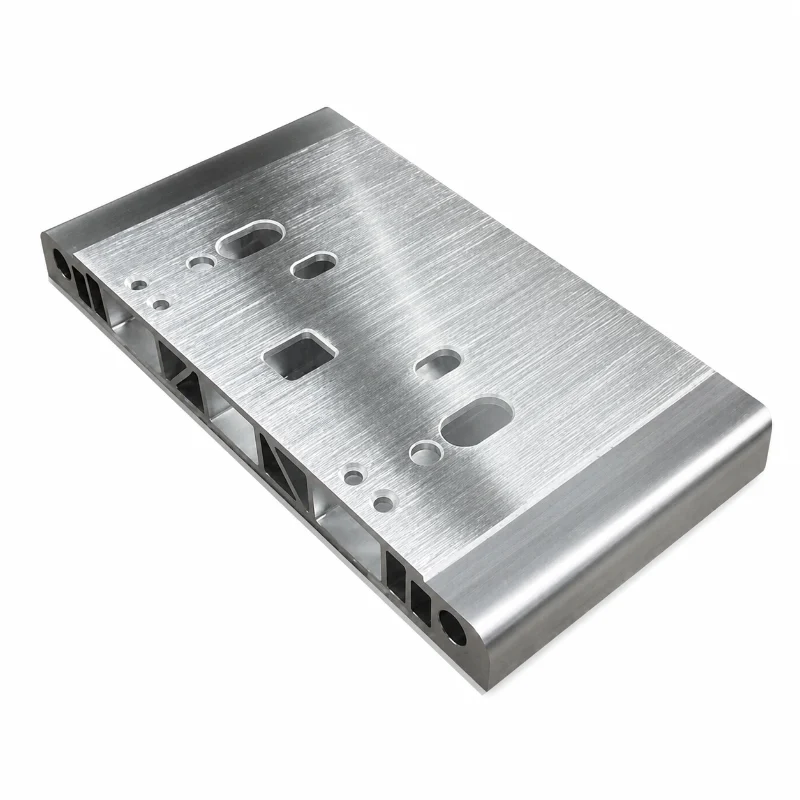
Precision-milled component engineered for automotive structural applications, optimized for complex geometries and high-strength materials.
- Precisión dimensional: ±0.02–0.05 mm depending on geometry
- Compatibilidad de materiales: High-strength aluminum alloys, Plásticos de ingeniería
- Complex Features: Deep slots, intersecting planes, multi-surface structures
- Acabado superficial: Smooth milled surfaces, Ra ≈ 1.6–3.2 μm
- Batch Support: Prototype to low/medium-volume production runs
Compartir:


- Descripción
- Especificación
- Aplicación
- Preguntas frecuentes
This CNC-milled part demonstrates advanced milling capabilities for automotive applications, specifically designed to meet stringent dimensional tolerances while accommodating intricate features such as intersecting planes, ranuras profundas, and multi-surface structures.
Manufactured from high-strength aluminum alloys or engineering plastics, the component ensures structural integrity and reliable performance in critical assemblies. Multi-axis CNC machining combined with precision fixturing enables high repeatability and minimal material stress, supporting everything from prototype validation to low- and medium-volume production runs. The result is a robust, preciso, and assembly-ready part capable of meeting demanding automotive engineering standards.
| Parámetro | Especificación |
| Precisión del proceso | ±0.02–0.05 mm (dependiendo de la geometría) |
| Materiales | Aleaciones de aluminio, Plásticos de ingeniería |
| Acabado superficial | Smooth milled, Ra ≈ 1.6–3.2 μm |
| Feature Types | Deep slots, intersecting planes, multi-surface structures |
| Carreras en lote | Prototype → Low/Medium volume |
| Tiempo de espera | 7–15 working days (dependiendo de la complejidad & batch size) |
- Automotor: Battery mounts, structural supports, precision assembly components
Q1: What materials are suitable for this component?
Aluminum alloys and engineering plastics are supported, optimized for automotive structural use.
P2: What kind of geometric complexity can be achieved?
Multi-surface machining, ranuras profundas, and intersecting planes are achievable using multi-axis CNC milling.
P3: What tolerances are maintained during production?
Dimensional tolerances of ±0.02–0.05 mm are reliably maintained depending on the feature complexity.
P4: Can both prototype and small-batch production be supported?
Sí, this component can be produced from prototypes to low- and medium-volume production runs.
P5: Qué acabados superficiales están disponibles?
Smooth milled surfaces (Ra ≈ 1.6–3.2 μm) are standard; additional finishing options can be applied if required.