

CIXIN MACHINERY TECHNOLOGY

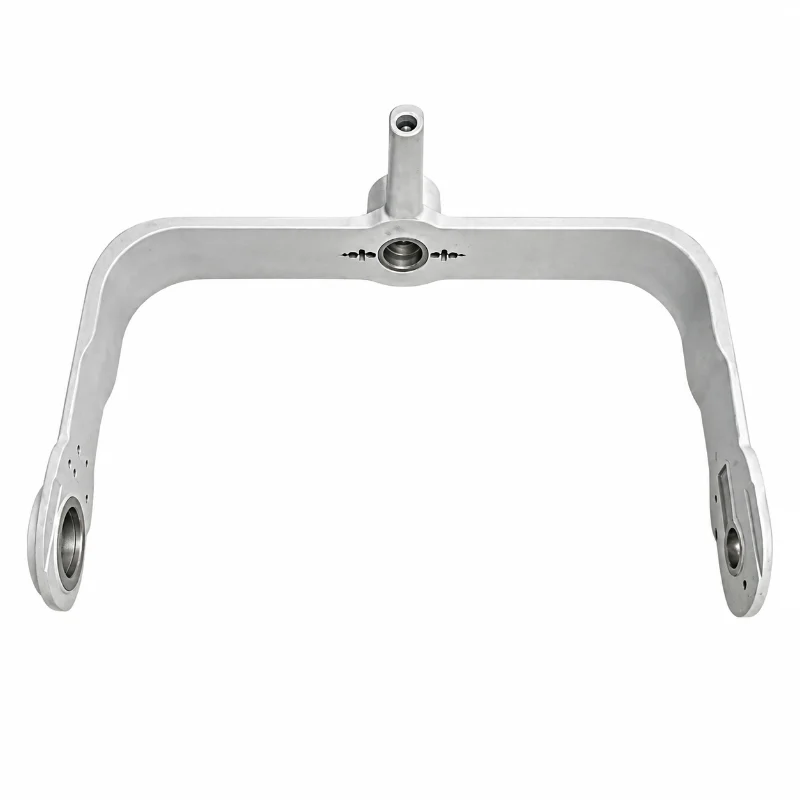
Wire EDM Precision Structural Component
- Micron‑Level Precision: Wire EDM achieves tight dimensional control and accurate contour reproduction.
- Sharp Internal Features: Capable of cutting internal profiles and intersecting geometry that conventional milling cannot reach.
- Material Versatility: Suitable for hardened steels, aluminum alloys, titanium, and exotic alloys with minimal distortion.
- Burr‑Free Surfaces: EDM process produces clean edges and corners, reducing the need for secondary finishing.
- Minimal Heat Distortion: Non‑contact cutting ensures no thermal deformation, ideal for critical assemblies.
- Production Support: From prototype runs to medium and high‑volume production with consistent outcomes.
Share:


- Description
- Specification
- Application
- FAQS
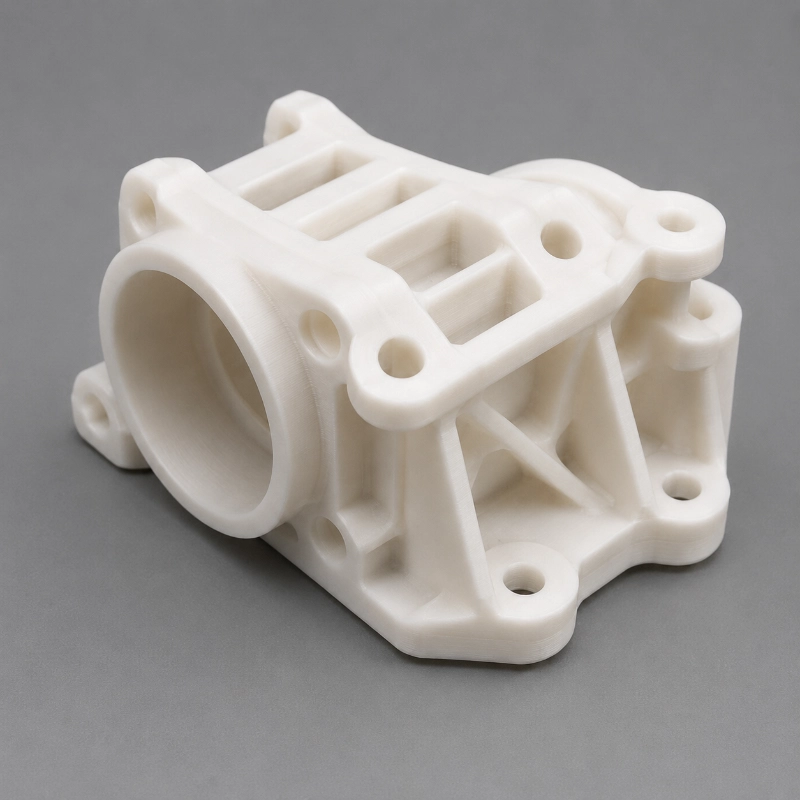
This component features complex openings, intersecting cutouts, and precise bore references that are difficult to achieve with traditional milling. Wire EDM technology enables high-precision machining by eroding material with a thin wire electrode, eliminating mechanical contact and minimizing thermal distortion. The process produces sharp internal corners, burr-free edges, and true flatness, which are critical for aerospace, precision instrumentation, and industrial automation applications.
At CIXIN, Wire EDM machining is combined with advanced fixturing and process optimization to maintain consistent dimensional tolerances and surface quality across prototypes, small-batch, and medium-volume production. Secondary finishing, such as edge deburring, is minimized thanks to the clean erosion process. These capabilities ensure that every part meets functional and assembly requirements with minimal post-processing. The process allows machining of hardened metals, stainless steel, titanium, and aluminum alloys, making it suitable for a wide range of high-performance applications.
Wire EDM enables the production of complex profiles that would be impossible or highly inefficient with conventional methods. The non-contact cutting process preserves the material's mechanical properties, provides repeatable accuracy, and allows for reliable integration into critical assemblies. Fast turnaround times and consistent quality make this service ideal for applications demanding precision, repeatability, and high surface integrity.
| Parameter | Details |
| Material | Hardened steel / Stainless steel / Titanium / Aluminum alloys |
| Typical Tolerance | ±0.01 mm to ±0.03 mm |
| Surface Finish | Ra 1.6–3.2 μm (typical) |
| Feature Types | Internal profiles, intersecting slots, precise holes |
| Max Workpiece Size | Up to 300 × 200 × 100 mm (customizable) |
| Production | Prototype → Small batch → Medium volume |
- Aerospace & Defense: Precision structural parts with tight corner requirements
- Medical Instruments: Clean and accurate profile components for assemblies
- Automotive & EV: Precision die components, guide plates, structural supports
- Industrial Equipment: High‑precision pieces for robotics, jigs, and fixtures
Q1: Why choose Wire EDM for this component?
When part geometry includes internal profiles, intersecting cutouts, and features impossible to reach with standard milling, wire EDM delivers dimensionally accurate, burr‑free results without mechanical stress.
Q2: How does the process maintain dimensional integrity?
Wire EDM uses electrical discharge rather than mechanical force, eliminating heat deformation and tool deflection. This ensures true flatness and consistent feature positions.
Q3: What materials can be processed?
High‑hardness steels, stainless steels, titanium alloys, aluminum alloys, and exotic metals — all with minimal effect on material properties.
Q4: Is secondary finishing required?
In many cases, no. The EDM process produces smooth, burr‑free edges that meet functional assembly requirements, reducing the need for additional machining.
Q5: What production volumes can you support?
Wire EDM at CIXIN supports one‑off prototypes, small batches, and medium volume production runs with repeatable quality and turnaround efficiency.